Picturing to Learn (PtL) is founded on the following core premises:
Background:
After a successful pilot project, the National Science Foundation, Division of Undergraduate Education has funded this Phase 2 expansion of Picturing to Learn until Aug. 31, 2010. The expanded project currently involves science students and faculty from Harvard, MIT, Duke University and Roxbury Community College, along with design students and faculty from the School of Visual Arts, New York.
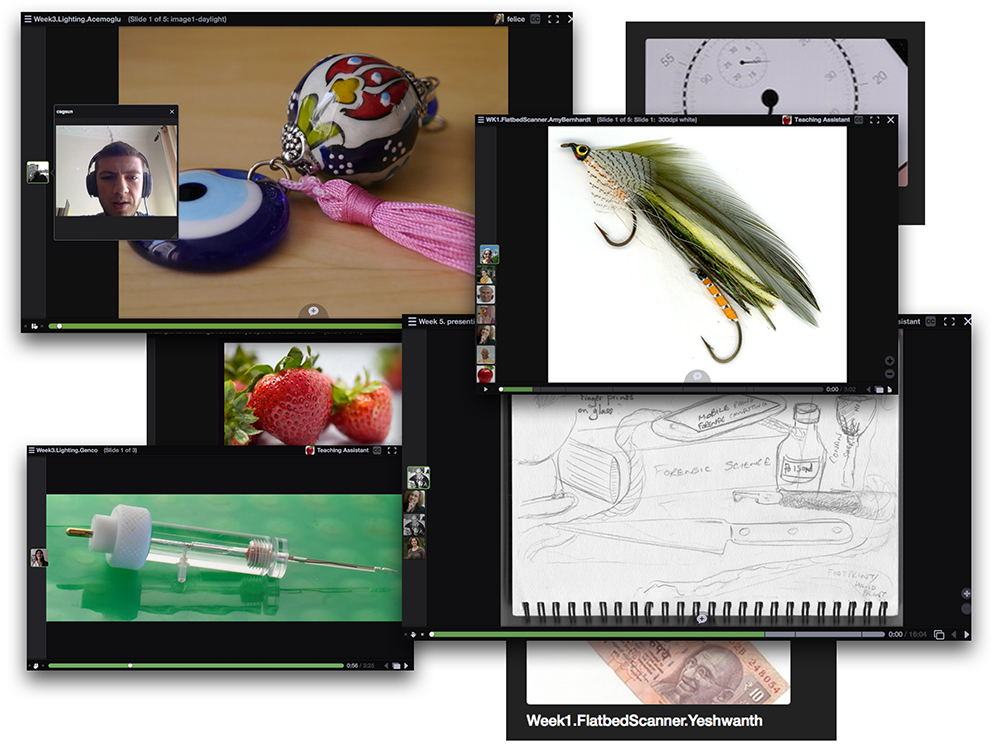
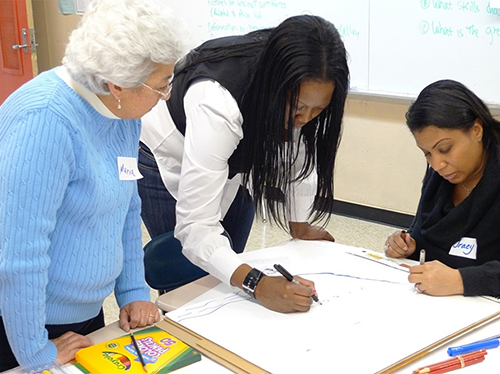
Picturing to Learn is creating a database of more than 4,000 drawings from various undergraduate science courses. (To see an example of a database entry, click here). Students are asked to “Create a freehand drawing to explain to a high school senior…” a scientific phenomenon. For evaluation purposes, students and teaching assistants are also asked to respond to questionnaires.
The idea began with Principal Investigator Felice Frankel’s experiences while working with scientists to visually express their research. It was clear that when the researcher created drawings to explain to her the phenomena, the process itself seemed to clarify the science in the mind of the researcher. Frankel approached a team of educators and cognitive scientists with the idea of using this in the classroom and all agreed this would be an innovative approach for teaching and learning.
http://www.picturingtolearn.org/
The Image and Meaning (IM) events began in 2001 by Felice Frankel in MIT's Envisioning Science Project. The purpose of the IM workshops was to help scientists, writers and visual communicators develop and share improved methods of communicating scientific concepts and technical information through images and visual representations. The goal was to enhance the level of discourse within the scientific community, among teachers and students, and those who communicate with the public. Several conferences and workshops have already been held: June 2001, June 2005, and IM2.x Workshops.
“Holy cow! It’s exceptionally rare that science is rendered in such lucid, thoughtful, charming fashion. I’ve never encountered a beautiful book as important as this one, or vice-versa. ‘Awesome’ is an overused word, but No Small Matter is exactly, totally, gratifyingly that.”
—Kurt Andersen, author of Reset and Heyday, host of public radio’s Studio 360
“Frankel and Whitesides are masters at the art of envisioning the invisible. In this beautiful and beautifully written book, they open our minds and eyes to the thrillingly enigmatic world that we inhabit, embody, and create.”
—Harold McGee, author of
On Food and Cooking:
The Science and Lore of the Kitchen